Freshness Check at the Gate: Reading a Perfume's Age Before You Pay
Airport perfume counters are designed to feel like a last-minute treat: bright lights, glossy testers, a price that looks kinder than the high street. But a bottle on a duty-free shelf is not automatically fresher than one in your local Boots. In fact, travel-retail stock can be older than you expect, and the batch code on the box is often the only honest witness to its age. Learning to read that code — and to spot the signs of a perfume that has spent too long in the supply chain — is a small habit that can save you from a very expensive mistake.
Why airport stock can be older than high-street stock
Duty-free is not a fast-moving conveyor belt. Airports buy in bulk, and some terminals hold stock for months before it reaches the shelf. Niche lines, gift sets and seasonal exclusives can be especially slow to turn over. Add in warehouse storage, tarmac transfers and the warm, brightly lit environment of a terminal, and you have a bottle that may have been through more than a holidaymaker's suitcase.
That does not mean every duty-free perfume is stale. Many are perfectly fresh. But the assumption that airport equals fresher is wrong. The batch code is how you check rather than guess.
The code is not a secret — just a puzzle
Batch codes are usually stamped, etched or printed on the bottom of the box and, often, on the bottle itself. They are not expiry dates. They tell you when the bottle was produced, usually in a brand-specific format.
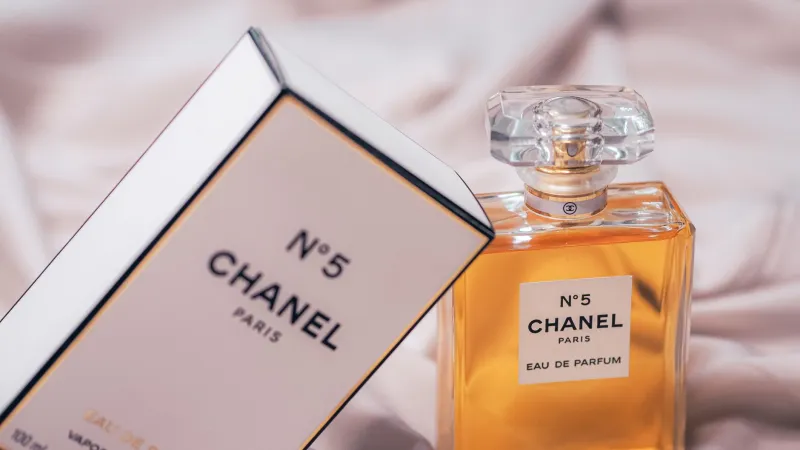
Chanel often uses a four-digit code. Dior, YSL and L'Oréal-group brands vary between letters and numbers. Estée Lauder companies tend to use a three-character code. The trick is to search the brand name plus 'batch code checker' and use a reputable decoder. Cross-check the box and the bottle: they should match. If the box has no code, or the code on the box does not match the bottle, put it down.
What to inspect before you commit
Start with the tester. Spray it on a blotter, not your wrist. A fresh citrus should smell bright; if it turns sharp, dusty or smells of little more than alcohol, the top notes have likely faded. Look at the liquid in the bottle: a clear fragrance should be clear, not amber. A pale pink should not look brown. Sediment or cloudiness is a warning sign.
Check the box for sun fade, crushed corners or a damaged seal. Cellophane should be tight and intact. If the box looks like it has been sitting in a window display since last summer, it probably has.
Questions worth asking at the counter
You are allowed to ask questions. Staff at airport counters are used to it. Try: 'When did this batch arrive?' or 'Can you check the code on the box for me?' A good counter will help. A vague answer is not proof of a problem, but it is a reason to slow down.
Ask about the return policy too. UK airport perfume returns can be tricky once the seal is broken, and rules vary by retailer. If you are spending serious money, know where you stand before you pay.
Red flags that should end the conversation
A deep amber liquid in a fresh citrus scent. A tester that smells of pure alcohol. A box with no batch code at all. A code that looks scratched off or reprinted. A bottle that is dusty under the cap. A price that is dramatically lower than everywhere else, with no explanation. Any one of these is enough to walk away. There will be another flight, and another bottle.
The storage story airports don't put on the tag
Perfume dislikes heat, light and vibration. Airports offer all three. Stock can sit in warm warehouses, then move to brightly lit counters where testers are sprayed hundreds of times a day. That does not ruin every bottle, but it explains why a duty-free perfume can smell different from the same juice on a cooler high-street shelf. If you are buying a bottle you plan to keep for a special occasion, freshness matters more than the saving.
A three-minute pre-flight routine
Before you hand over your card, do this: find the batch code on the box, check it against the bottle, spray the tester, look at the liquid, ask when the stock arrived, and decide whether the saving is worth the risk. If anything feels off, leave it. A perfume that has spent too long in the supply chain will not improve with age, and neither will your mood when you open it at home.
Duty-free can still be a smart buy. Just make the bottle prove its age before it costs you.