Millilitres Don’t Lie: The 2026 Duty-Free Price-Per-Pour Check
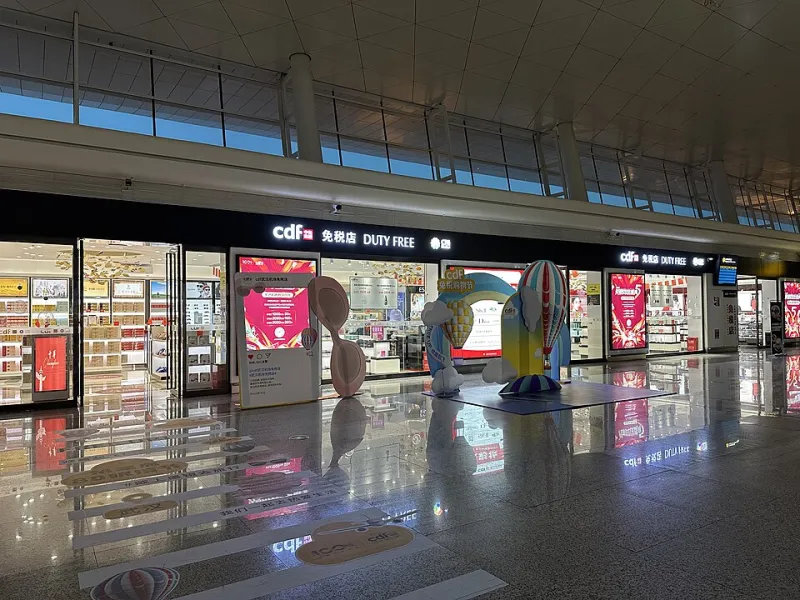
Photo: Maksym Kozlenko, CC BY-SA 4.0, via Wikimedia Commons
Airport perfume shelves are designed to feel familiar. Same logos, same glossy counters, same £70-ish price points. But pick up the bottle and the small print can tell a different story: 90ml where you expected 100ml, 45ml where 50ml used to sit, or a gift set that looks generous until you add up the juice. Welcome to the quiet shrinkflation audit every duty-free shopper should run in 2026.
This is not about accusing every brand of pulling a fast one. Fragrance sizes change, travel-retail exclusives exist, and reformulations happen for legitimate reasons. The point is simpler: the sticker price is not the deal. The price per millilitre is. And at an airport, where you have about four minutes before your gate changes, it is alarmingly easy to look at the big number and ignore the small one.
Why the shelf price feels familiar while the bottle shrinks
Shrinkflation works because your brain remembers the price point, not the pour. A fragrance that was £78 for 100ml becomes £79 for 90ml and the shelf still says £79. It feels like the same purchase. In reality, you are paying more for less unless the price has moved down enough to compensate.
The 90ml bottle is the obvious example, but it is not the only one. Look for 75ml replacing 80ml, 45ml replacing 50ml, and travel sets that swap three 30ml bottles for two 50ml bottles. None of these are automatically bad. A 90ml travel-retail size can be genuinely useful if you travel with cabin bags and never finish a 100ml bottle. But useful is not the same as good value. You still need to do the maths.
The only maths you need before you tap
Divide the price by the millilitres. That is it. Price ÷ ml = cost per ml. Do it on your phone before you get to the till, because the airport assistant is not there to run a shrinkflation seminar.
A simple example. Suppose a scent you know was £80 for 100ml. That is £0.80 per ml. The new airport bottle is £82 for 90ml. That is £0.91 per ml, roughly a 14% jump in cost per ml. The sticker has barely moved. The value has.
Now reverse it. A bottle at £75 for 75ml is £1.00 per ml. A bottle at £78 for 80ml is £0.98 per ml. The second sticker is higher, but the pour is better value. This is why comparing the headline price across different sizes is a waste of time.
Gift sets need the same treatment. Add up the total millilitres, not the number of boxes or the size of the carrier bag. Three 30ml bottles give you 90ml. Two 50ml bottles give you 100ml. If the first set is £90 and the second is £90, the second is £0.90 per ml and the first is £1.00 per ml. The packaging may tell a different story. The maths does not.
And always compare against a UK high-street or online price per ml, not just the airport's own 'was' price. If the airport bottle is £85 for 90ml, that is £0.94 per ml. If the UK 100ml is £110, that is £1.10 per ml. The airport is still cheaper per ml, but the saving is smaller than the sticker suggests. If the airport bottle is £95 for 90ml, you are at £1.06 per ml and the gap has almost vanished.
Concentration creep: when the same name is a different pour
Millilitres are only half the audit. Concentration matters too. An eau de toilette and an eau de parfum are not interchangeable just because the bottle looks similar. If a brand moves a scent from edt to edp, or launches an 'intense' version at a similar price, the price per ml may look fine while the wear time changes.
The trickier scenario is when the name stays the same but the concentration or formula shifts. A fragrance can be reformulated because of ingredient restrictions, supply problems or cost pressure. That does not make it a con, but it does mean your memory of the scent is not a reliable receipt. Spray it on skin, not paper. Wait at least half an hour. Walk to the gate and sniff again. If it vanishes before you reach security, that is useful information.
Reformulation tells: box copy, batch codes and the tester test
You will not always get a loud announcement that a formula has changed. Look for small clues: 'new formula', 'updated', 'intense' or 'collection' language on the box; a different ingredients list; a changed bottle shape; or a tester that smells sharper, thinner or more synthetic than you remember. Batch codes can help you check roughly when a bottle was made, but do not treat online decoders as gospel. They are a rough guide, not a lab report.
The best test is still your own skin. Airport testers can be stale, overwarmed by lights or simply different from the sealed stock. Spray once, resist the urge to layer it with three other scents, and judge it after a proper walk. If the tester smells like a ghost of the fragrance you loved, do not buy blind just because the bottle is pretty and the price ends in .99.
The packaging shuffle: weight, caps and refills
Shrinkflation is not only about glass. A heavier base or a magnetic cap can make a smaller bottle feel substantial in the hand. Put it down and read the label. Refillable formats are another area to watch. A refill pouch may be better value per ml, or it may be a smaller pour with extra packaging. Check the refill volume, not just the words 'refill' and 'sustainable'.
Travel-retail exclusives can also muddy the water. A genuine airport-only size is not a problem if the price per ml works. But 'exclusive' does not automatically mean 'bargain'. It means you cannot easily compare it on the high street, which is exactly why you need the calculator.
A five-minute airport audit
Start with the label: millilitres and concentration. Then price per ml. Then compare that figure with a UK price per ml you trust. If it is a set, add the total ml. If it is a refill, check the refill volume. Spray the tester on skin and give it time. Ask the assistant whether the size or formula has changed recently; some will know, some will not, but the question is free.
Finally, decide what you are actually buying. If you want a 90ml bottle for a weekender and the price per ml is level with the 100ml, that is a fair choice. If you are buying because the sticker looks like last year's price, slow down. The bottle may be smaller, the formula may be different, and the only thing that has stayed the same is the number you first noticed.
Duty-free can still be good value in 2026. But the deals that survive scrutiny are the ones where the millilitres, the concentration and the price per pour all stack up. The rest is just shelf theatre.